Your first appointment • What to do & what to expect
First, we listen.
Then, we plan.
That’s where we start.
Your child’s first therapy appointment is an intake: a visit for understanding the concerns, reviewing confidentiality, and making an initial treatment plan together.
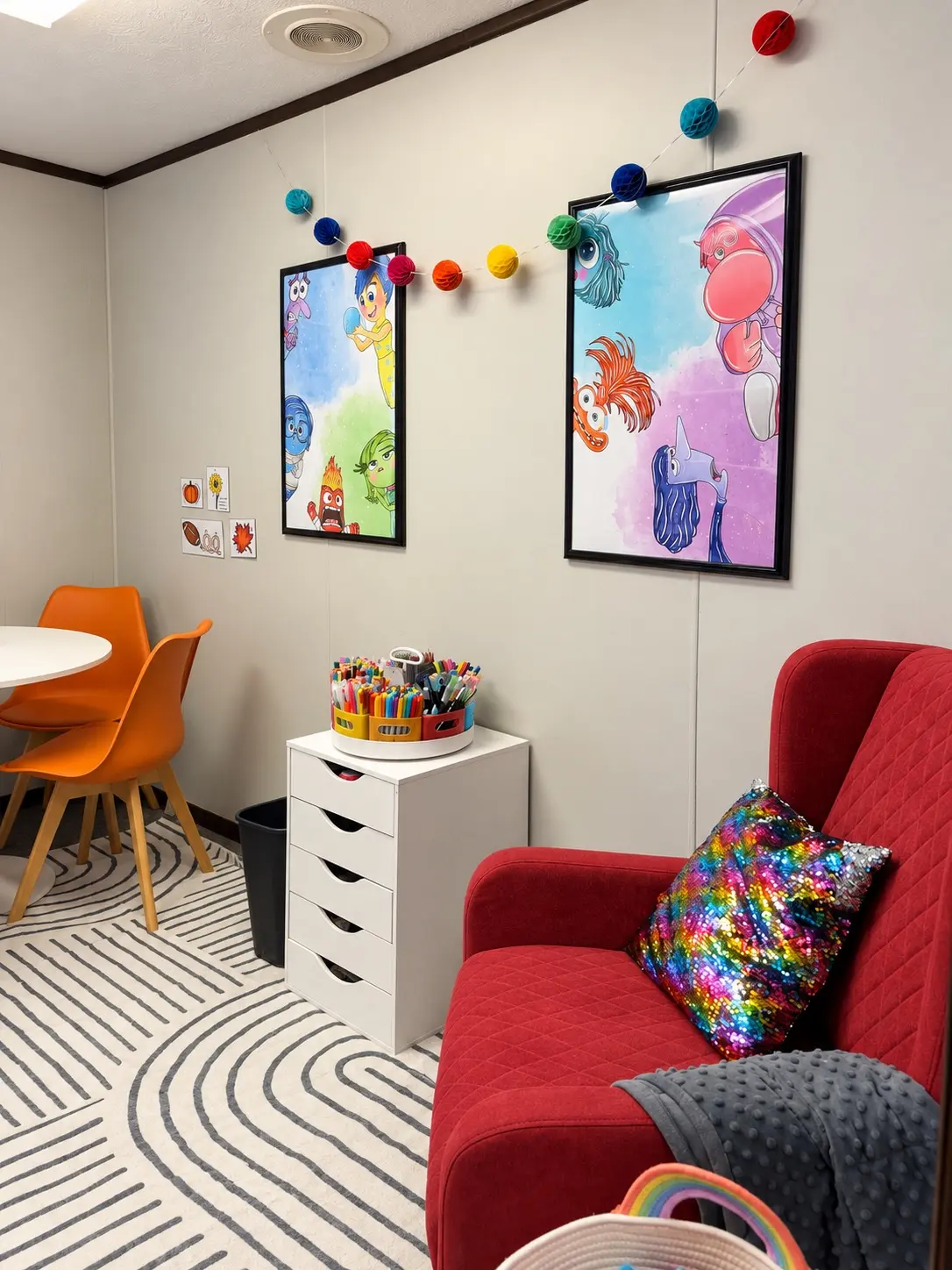

For the grown-ups
Your first appointment,
step by step.
The first session looks different from a typical therapy visit. We spend more time gathering information, reviewing how therapy works, and discussing the plan for treatment. Here is how to prepare and what we will cover.
Start with the front office.
Use my profile with Dr. Jackie Jiang & Associates to ask about services, or call 309-944-7833. Let the office know you are interested in seeing Anna Pepping. Scheduling, insurance questions, fees, and intake arrangements go through the office.
Visit my practice profileComplete the forms and gather your questions.
Complete the intake and consent forms the office sends before the appointment when possible. Have relevant treatment or school information available, along with anything the office has requested. If custody or guardianship arrangements apply, ask which documents are needed.
Write down the main concerns, a few recent examples, what you have already tried, and what you hope will improve. You do not need a polished summary. Tell the office in advance about communication, sensory, mobility, or other access needs so we can discuss helpful arrangements.
Come with your child and plan to participate.
A parent or legal guardian should attend the first appointment with the child. Please plan to stay and participate rather than treat this as a drop-off visit. Your knowledge of your child and family is an important part of the intake.
Your child will participate in the appointment as well, in a way that fits their age, communication style, and comfort. We will make room for their perspective while I learn from you. If there is sensitive information you would prefer to discuss privately, let me know.
We discuss the presenting problems: what brings you in.
“Presenting problems” simply means the concerns that led you to seek therapy. We will talk about what is happening, when it started, how often it happens, and how it affects life at home, at school, or with other people.
I will ask about relevant history, your child’s strengths, supports, previous services, and what has or has not helped. Concrete examples are useful: “Getting to school takes an hour of arguing,” or “Worries keep them awake most nights.” Both your observations and your child’s experience help us understand where to start.
We review confidentiality and how therapy works.
We will review confidentiality, its limits, and what those mean for your child’s care. This includes how privacy is handled, how caregiver communication fits into treatment, and circumstances involving safety or required reporting.
We will also talk about expectations for participating in therapy and leave room for questions. I will explain these ideas to your child in a way that fits their age and understanding.
We talk about therapy goals and the treatment plan.
We will discuss what you and your child want help with and identify initial therapy goals. That might mean getting through routines with less conflict, managing worry, strengthening emotional regulation, or improving family communication—depending on your child’s needs.
The treatment plan connects those goals with the work we will do in therapy. We will discuss the initial approach, caregiver involvement, and what meaningful changes in everyday life could look like. The plan can be adjusted as we learn more.
We identify the first steps and what comes next.
Before we finish, we will discuss the starting plan, questions that still need attention, and follow-up arrangements. The office handles scheduling. Later sessions will have more room for the ongoing therapeutic work, which may include conversation, play, art, books, games, or practicing skills.
The intake is a foundation for that work. It is not meant to fit a whole course of therapy into one appointment.
What to expect when you leave
A plan. A starting point.
A first step.
You should expect an initial understanding of the concerns, a discussion of therapy goals and the treatment plan, and a sense of what happens next.
You should not expect to leave the intake with all the answers, a complete set of coping skills, or the presenting problems resolved. We may begin talking about helpful ideas, but skill-building and change happen through the ongoing work. Beginning with a plan is meaningful progress.
A practical little checklist
Before you leave home
- Confirm the appointment time and location.
- Plan for a parent or legal guardian to attend with your child.
- Complete the requested intake and consent forms.
- Bring your main concerns, examples, questions, and relevant records.
- Explain that this visit is for getting acquainted and making a plan.
- Ask the office about any supports or arrangements your child needs.
What about updates after the first visit?
We will discuss how caregiver updates and parent conversations fit into your child’s treatment. Updates are based on clinical judgment and your child’s needs; they are not necessarily a word-for-word recap of every session. Please ask questions about your role, communication, or the treatment plan so we can clarify expectations together.

Read together before a visit
My first appointment with Anna.
A picture story about attending together, sharing concerns, learning about privacy, and making a plan. Read it as written, or adapt the words to your child’s age and way of communicating.

I’m going to meet Anna.
Anna is a therapist. She helps kids and families with feelings, worries, and things that are hard.
No timer. No need to rush. Read it together, skip around, or come back later.
Read the whole story as text
I’m going to meet Anna.
Anna is a therapist. She helps kids and families with feelings, worries, and things that are hard.
I can wonder about it.
I might feel curious, excited, nervous, unsure, or something else. I can ask questions before we go.
My grown-up comes with me.
My parent or guardian comes to the first appointment and joins in. We will meet Anna together. My grown-up will help explain why we are coming.
We talk about what is hard.
Anna will ask questions about me, my strengths, and what has been difficult. My grown-up will share, and I get to participate too. I can use my usual way to communicate or ask for a pause.
We learn about privacy.
Anna will explain how privacy works in therapy. She will talk about what can stay private and when she needs to share information to help keep someone safe. We can ask questions.
We start making a plan.
We will talk about what I want help with and what my grown-up hopes will get easier. These are therapy goals. Anna will help us discuss a plan for working on them.
The first visit is a little different.
This appointment has more questions and planning. Later visits may include talking, drawing, games, or practicing skills. We do not have to do everything at the first visit.
We leave with a first step.
We do not need to leave with all the answers or a whole set of new skills. We are beginning with a plan. Anna and my grown-up will help me know what comes next.
A parent or legal guardian attends the first appointment with the child. The exact activities and time spent together may vary with your family’s needs.
Prefer to watch?
A little preview.
At your pace.
The same story, with photos of Anna and the office. It is silent, with the words on screen. Pause whenever you like, or read along using the story above.

A beginning, not a performance
Questions are welcome.
So is taking your time.
If you are exploring therapy for your child, the front office can help with availability, intake, and your specific insurance plan.
Ask about getting startedAnna Pepping, LCSW · Dr. Jackie Jiang & Associates · Moline, Illinois